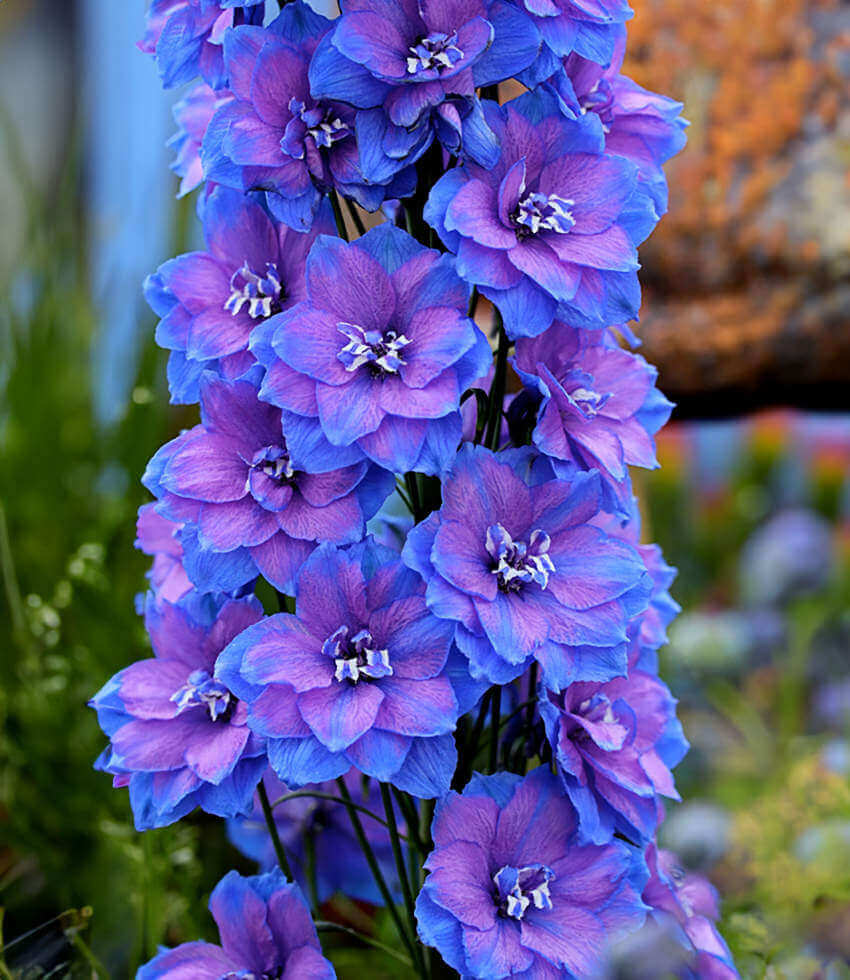

Asclepias speciosa
Much like 'Davis', this is the straight species, Asclepias speciosa, that's native to much of the western half of the US. Just as stunning in bloom and pinker in color, the fragrant, starry bloom clusters 4" across top 3' upright, thick stems. Big smooth green, oval leaves instead of silvery ones. Will bring the Monarchs and their stunning caterpillars and chrysalises. It needs very little to no Summer water once established, tolerating most soils including clayish. If happy, will form spreading clumps over time. Deer resistant!
Note regarding Bt / Bt (Bacillus thuringiens: As of 2023, the California Department of Agriculture no longer requires growers to use Bt (Bacillus thuringiensis), as a naturally occurring biological insecticide (also commonly used on organically grown fruits and vegetables), to control against LBAM (Light Brown Apple Moth) within the State of California. Bt was known to be toxic to caterpillars, particularly the Monarch butterfly caterpillar. However, even if Bt is no longer used, other harmful residues may still be on plants when they arrive. Therfore, we advise our customers to wait one growing season (or approximately one year) before introducing Monarch caterpillars to any Asclepia (Milkweed) plant. This helps ensure the plants are large enough to provide sufficient food and any other chemical residues have had time to wear off.
Much like 'Davis', this is the straight species, Asclepias speciosa, that's native to much of the western half of the US. Just as stunning in bloom and pinker in color, the fragrant, starry bloom clusters 4" across top 3' upright, thick stems. Big smooth green, oval leaves instead of silvery ones. Will bring the Monarchs and their stunning caterpillars and chrysalises. It needs very little to no Summer water once established, tolerating most soils including clayish. If happy, will form spreading clumps over time. Deer resistant!
Note regarding Bt / Bt (Bacillus thuringiens: As of 2023, the California Department of Agriculture no longer requires growers to use Bt (Bacillus thuringiensis), as a naturally occurring biological insecticide (also commonly used on organically grown fruits and vegetables), to control against LBAM (Light Brown Apple Moth) within the State of California. Bt was known to be toxic to caterpillars, particularly the Monarch butterfly caterpillar. However, even if Bt is no longer used, other harmful residues may still be on plants when they arrive. Therfore, we advise our customers to wait one growing season (or approximately one year) before introducing Monarch caterpillars to any Asclepia (Milkweed) plant. This helps ensure the plants are large enough to provide sufficient food and any other chemical residues have had time to wear off.
Description
Much like 'Davis', this is the straight species, Asclepias speciosa, that's native to much of the western half of the US. Just as stunning in bloom and pinker in color, the fragrant, starry bloom clusters 4" across top 3' upright, thick stems. Big smooth green, oval leaves instead of silvery ones. Will bring the Monarchs and their stunning caterpillars and chrysalises. It needs very little to no Summer water once established, tolerating most soils including clayish. If happy, will form spreading clumps over time. Deer resistant!
Note regarding Bt / Bt (Bacillus thuringiens: As of 2023, the California Department of Agriculture no longer requires growers to use Bt (Bacillus thuringiensis), as a naturally occurring biological insecticide (also commonly used on organically grown fruits and vegetables), to control against LBAM (Light Brown Apple Moth) within the State of California. Bt was known to be toxic to caterpillars, particularly the Monarch butterfly caterpillar. However, even if Bt is no longer used, other harmful residues may still be on plants when they arrive. Therfore, we advise our customers to wait one growing season (or approximately one year) before introducing Monarch caterpillars to any Asclepia (Milkweed) plant. This helps ensure the plants are large enough to provide sufficient food and any other chemical residues have had time to wear off.